How to Host a Casino-Themed Film Evening with a Second Plan
Plan a casino-themed film evening with a clear tone, comfortable viewing, and a ready alternative so guests can enjoy the gathering even if they skip the film.
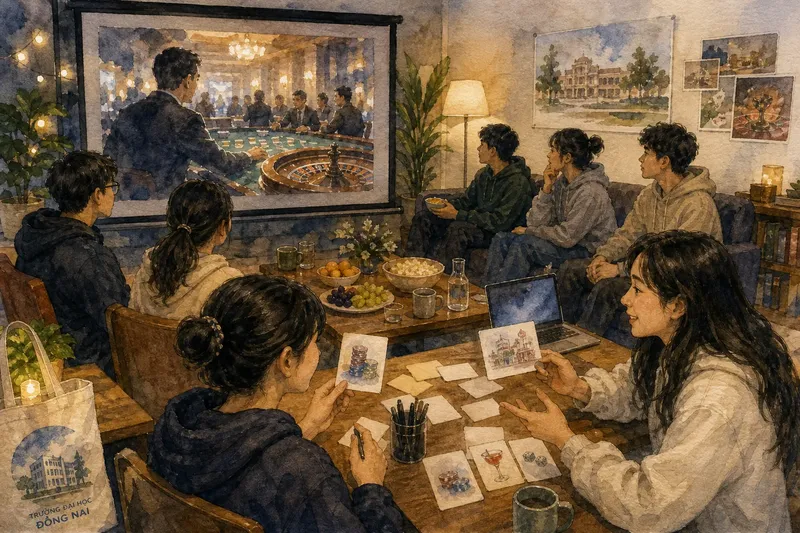
The most common mistake in a casino-themed film evening is treating the movie as the whole event. If it leaves guests uncomfortable or simply does not suit their mood, the evening can stall. Build the gathering around shared attention and conversation, with a second activity that feels just as welcome as watching.
A casino-themed film evening can bring together students, friends, or colleagues to talk about the stories and images attached to casino culture. It might take place in a living room, student common room, or campus space at Trường Đại học Đồng Nai. Keep the invitation clear, and let guests choose how they take part.
Choose a film that fits the group
Casino stories can focus on glamour, risk, work, friendship, deception, or memory. Those differences matter more than a familiar title or a striking poster. Describe the tone before choosing, and check whether the subject matter suits the people you are inviting.
For example, an invitation could say: “We’re watching a character-focused story about casino culture, then sharing thoughts about its setting and choices. A discussion activity will be available for anyone who prefers not to watch.” This gives guests enough context to decide without requiring them to explain their choice.
- Content: Check for gambling, addiction, violence, or coercion. If those themes may be unwelcome, choose a different title or make the discussion activity the main event.
- Timing: Check whether the film suits the group’s energy and available evening. If it feels like too much after class or work, choose a shorter permitted program or skip the screening.
- Access: Check that the title is available through an authorized service and can be shown in the planned room. If access is unclear, select a title with a clear, permitted viewing route.
- Discussion: Check whether the film offers choices, images, or relationships to talk about. If the only hook is its casino backdrop, choose a story with more to consider or use a different format.
- Guest preference: Check whether invitees prefer a feature, a short selection, or no film. If preferences differ, offer a small set of clearly described options or let the non-film plan take the lead.
- Room arrangements: Check the booking and screening rules for a campus or shared space. If the room does not allow the planned showing, move to an appropriate venue or hold a discussion-only gathering.
Make the choice based on the evening you want to host, not on a title alone.
Prepare the room and a simple fallback
A good conversation can be hard to follow if the screen is difficult to see or the room is noisy. Before guests arrive, check the television or projector, speakers, playback source, lighting, and seating. In a campus room, confirm that the equipment and booking arrangements fit the plan.
Keep the clearest sightline open and place refreshments away from the screen. Water, tea, fruit, and simple snacks are easy to manage. Skip betting games, gambling props, and money-based activities; the film and conversation can carry the theme without asking anyone to perform it.
Prepare a fallback that needs little equipment: a discussion prompt, blank cards, and pens. Say you have reserved a shared lounge, but the projector is unavailable. You check that a laptop can play the authorized film, draw chairs closer to its screen, and tell guests the smaller setup is ready; if the picture is still difficult to see, you switch to the prepared card activity. The observable result is a clear choice between a workable screening and a discussion, rather than a delay while the group waits for equipment.
Test the playback route and know which activity you will offer if it fails.
Keep the discussion tied to what guests watched
A conversation can stall if the host asks only whether people liked the film. It can also drift into claims about real casinos or local life that the gathering cannot settle. Ask about the choices the film makes: a character’s decision, a repeated image, a shift in mood, or a detail the story leaves in the background.
Choose a few prompts and let people pass. Nobody should need to share personal experience to take part.
- Which scene changed your impression of a character?
- What did the story suggest about luck, control, or risk?
- Which details made the setting feel specific, and which seemed familiar from other stories?
- Whose point of view shaped the way the casino appeared?
- What might the film leave out because of that point of view?
If someone makes a broad claim, ask which scene led them to that reading. This keeps the conversation grounded in the shared story without asking anyone to settle a wider argument.
What should you do if the evening changes course?
What if guests prefer different kinds of films?
Offer a small choice with a plain description of each title’s tone and subject. If the group still disagrees, move to the discussion activity instead of turning the invitation into a contest.
What if someone would rather avoid gambling themes?
Accept the boundary without asking for a reason. Offer the alternate activity or choose another title before the screening begins.
What if the film is not available to show?
Use a title available through an authorized viewing route, or change the evening to a discussion-only gathering. Do not rely on a copy or screening arrangement whose permission is unclear.
What if guests arrive tired and do not want to watch?
Offer the prepared activity without presenting it as a consolation. A short conversation about images, language, or storytelling can give the evening its own purpose.
Give the alternative its own shape
A non-film plan works best when it feels complete rather than improvised for reluctant guests. Invite people to consider the images casino stories use, compare how different characters understand a setting, or collect words that suggest glamour, labor, risk, or memory. Keep the activity open-ended and avoid asking anyone to imitate gambling.
Imagine guests arrive after a long campus day and several say they would rather talk than watch. You set out blank cards and pens, ask each person to write one image they associate with casino stories, then invite volunteers to explain where they think that image comes from. The expected result is a shared list of ideas and a conversation that includes people who opted out of the film.
Put the alternate activity in the invitation and introduce it neutrally. Guests may want a different format for any number of reasons.
What details make a film evening feel welcoming?
Keep the room focused on viewing and conversation rather than recreating a casino. A simple title card, printed prompts, and comfortable seating are enough. Playing-card decor, faux chips, and betting games can change the feel of the event and distract from its purpose.
Use precise language when talking about the story. Ask what the film emphasizes about luck, glamour, risk, or work, and what it leaves unseen. That gives guests something specific to discuss without asking the film to stand in for a place, a university, or the people who live there.
Close with an optional prompt: ask guests to name one scene or idea they will remember, or let them write a note for the host. If the discussion activity became the main event, thank the group for shaping the evening and ask what format they might enjoy next time.
For a casino-themed film evening, a clear invitation and a ready alternative are practical tools, not signs that the screening has failed. Keep both options welcoming, and guests can take part in the way that suits them.